
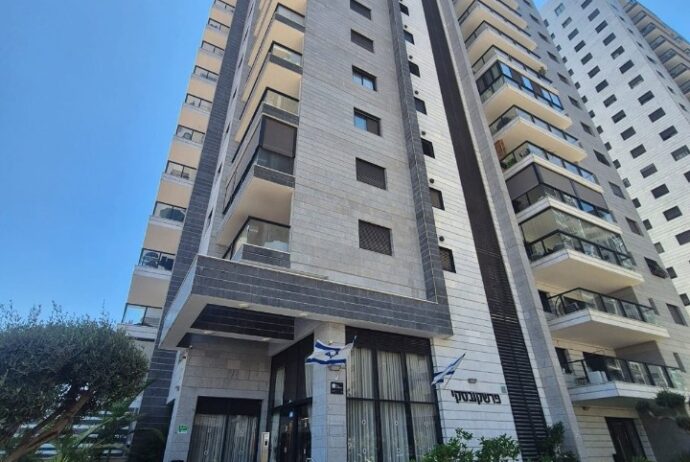
Many apartment buildings in Israel are run by volunteer building committees, which can make life complicated for landlords and tenants.
However beautiful your apartment, if the structure or common parts of the building are dirty or badly maintained, your property value and your standard of living may be affected. The building management committee – Va’ad Bayit – is one of the most important institutions in Israeli residential life, so it’s important for landlords and tenants to understand what they are legally required to do.
The Va’ad Bayit (“house committee”) is the residents’ committee responsible for managing any shared residential building with two or more residential units that share common areas or facilities. In many apartment buildings, the committee is effectively run by a few people whose characters, attitudes and relationships will determine how well the building is managed. If the committee becomes divided over a major decision, the deadlock may last for years and cause great bitterness.
The Va’ad Bayit remit covers the shared parts of the property: the stairwell, the entrance and lobby, the roof, bomb shelters, storage areas and, where relevant, the elevator, parking areas, communal gardens, swimming pool and gym. It is responsible for keeping these areas clean, functional, and properly insured, and for collecting the monthly fees that pay for all of it. Sometimes, the Va’ad Bayit employs a building management company and oversees their work.
The Legal Framework
The Va’ad Bayit is not a casual neighborhood arrangement. It is regulated by statute — specifically Chapter 6 of Israel’s Real Estate Law (Chok HaMekarke’in), which sets out the rules for shared buildings.
The law governs how committees are formed, how votes are conducted, what records must be kept, and how disputes are resolved. In broad terms, the law requires every shared building to have either a functioning Va’ad Bayit or some equivalent system for managing shared expenses. Owners must contribute to common expenses proportionally, usually based on apartment size. Financial records must be maintained and made available to owners on request, and decisions must follow proper notice and democratic voting procedures.
Oversight at the national level is provided by the Aguda LeTarbut HaDiyur (the Housing Culture Association), a government body that publishes guidelines and offers mediation services. Formal disputes can be brought before the Mefake’ach al HaMekarke’in (the Land Registry Inspector) at the Ministry of Justice, who has quasi-judicial authority to resolve disagreements between owners and committees.
Legally Obligations of the Va’ad Bayit
A properly functioning Vaad Bayit has several core obligations:
- Maintaining and upkeep the common areas -keeping the stairwell, lobby, garden, elevator, and lighting clean and operational.
- Arranging insurance for the building’s common areas (this is part of what the monthly fee pays for, and is distinct from each owner’s individual structural insurance for their own apartment).
- Keeping proper financial records -an income and expenses book that any apartment owner has the right to review on request.
- Holding meetings at least once a year, with proper notice to all owners, and keep written minutes (protokolim) of decisions taken.
- Collecting fees and, where necessary, taking legal action against owners who do not pay — the committee can sue and even place a lien on a delinquent owner’s apartment.
- Issuing receipts for fees paid – every payer is legally entitled to one.
What Apartment Owners Pay the Vaad Bayit
The flip side of the Va’ad’s authority is that apartment owners have binding obligations toward it.
Owners must pay their proportional share of monthly fees and of any special assessments the committee legitimately approves. They must comply with majority decisions – once a vote is properly taken, dissenting owners are bound by the outcome. And they must accept the consequences of non-payment, which can include legal action and a lien on the property.
Crucially, voting rights belong to owners, not to tenants. Even when a tenant is in occupation and paying the monthly Vaad fee, it is the landlord whose voice counts at general meetings and whose interests are at stake when special assessments are proposed. For landlords living abroad, this creates a real problem: who is representing your interests when the building votes on a 100,000-shekel facade renovation?
What Tenants Owe
This is where many rental relationships in Israel run into trouble, because the rules are clear in principle but not always explained clearly at the time of signing the lease.
By custom, and by the standard language in almost every Israeli residential lease, the tenant pays the monthly Va’ad Bayit fee, not the landlord. This sits alongside the tenant’s other monthly obligations: Arnona (municipal tax), electricity, water, gas, and internet bills. The tenant is essentially paying for the upkeep of the building they live in while they live in it.
But routine monthly fees and special assessments are two very different things, and this is the distinction that matters most. Special expenses for major works, like roof replacement, elevator modernization, facade renovation, or installation of a MAMAD (safe room), are the responsibility of the landlord, not the tenants. These can run into many thousands of shekels per apartment, and tenants are not usually liable to cover the costs of capital improvements to the actual asset.
A well-drafted lease will spell this out explicitly. A poorly drafted lease will say only “the tenant pays Va’ad Bayit” and leave both sides arguing when a special expense arises.
What Monthly Fees Typically Look Like
Va’ad Bayit fees vary enormously depending on the building’s age, size, and amenities. As a rough guide for the current market:
- Older walk-up buildings with no elevator: roughly 100–200 NIS per month.
- Standard buildings with an elevator and basic services: 200–500 NIS per month.
- Newer buildings with more amenities: 500–1,500 NIS per month.
- Luxury buildings with pool, doorman, gym, or central heating: 1,500 NIS to 3,000+ NIS per month.
- In buildings with elevators, owners of larger apartments and apartments on higher floors are usually required to pay proportionally more than the owners of lower or smaller apartments, reflecting their greater use of shared infrastructure.
When Things Go Wrong
Disputes between owners and the Va’ad, or between neighbors within a building, are common.
The escalation path is well established:
- First, internal resolution through the committee and a properly convened general meeting.
- If that fails, mediation through the Aguda LeTarbut HaDiyur, which offers guidance and counselors for a small membership fee.
- Where the dispute cannot be resolved, formal proceedings are held before the Mefake’ach al HaMekarke’in at the Ministry of Justice, who has the authority to issue binding rulings.
For landlords – especially those living abroad – navigating any of these processes from a distance is not only time-consuming, but also extremely difficult. This is one of the areas where having an experienced property manager who is also legally-qualified, on your side makes a huge difference and provides you with peace of mind.
How We Protect Our Landlord Clients
Because tenants do not vote and landlords often do not live nearby, the Va’ad Bayit is one of the areas where overseas owners are most exposed. For every property under our management, Creative Estates makes sure to:
- Maintain a direct line of contact with the Va’ad Bayit chair or building management company on the owner’s behalf.
- Attend or review general meetings, flag proposed special assessments before they are voted on, and represent the owner’s position where needed.
- Exercising the owners’ statutory right to inspect the Va’ad’s annual accounts, which can protect against mismanagement.
- Handle disputes with the committee or with neighbors when they arise, so that the owner doesn’t have to manage a Hebrew-language argument by email from another time zone.
How We Protect Tenants — and Avoid Surprises
Every tenancy agreement we draft makes the Va’ad Bayit arrangement explicit. The tenant knows before signing how much the current monthly fee is, what it covers, and that they are not on the hook for special assessments or capital improvements. We confirm the current fee with the Va’ad directly, so there are no surprises after move-in, and we make sure the lease language draws the routine-versus-special distinction clearly.
This protects everyone. The tenant is not blindsided by a sudden demand for a share of a roof renovation. The owner is not left arguing with a tenant about whose responsibility a special assessment is. This ensures that the landlord-tenant relationship rests on clarity from day one.
The Bottom Line
The Va’ad Bayit is one of those features of Israeli life that can make owning a residential property either a pleasant experience or a constant source of headaches, whether you rent it out or live there yourself.
The legal framework is clear, the obligations on both sides are well established, and the division between landlord and tenant responsibilities – routine fees for the tenant, special assessments and voting rights for the owner – is workable as long as it is written into the lease and respected by both sides.
If you own a property in Israel and want someone to keep an eye on your Va’ad Bayit as part of our property management service, we would be happy to talk to you.